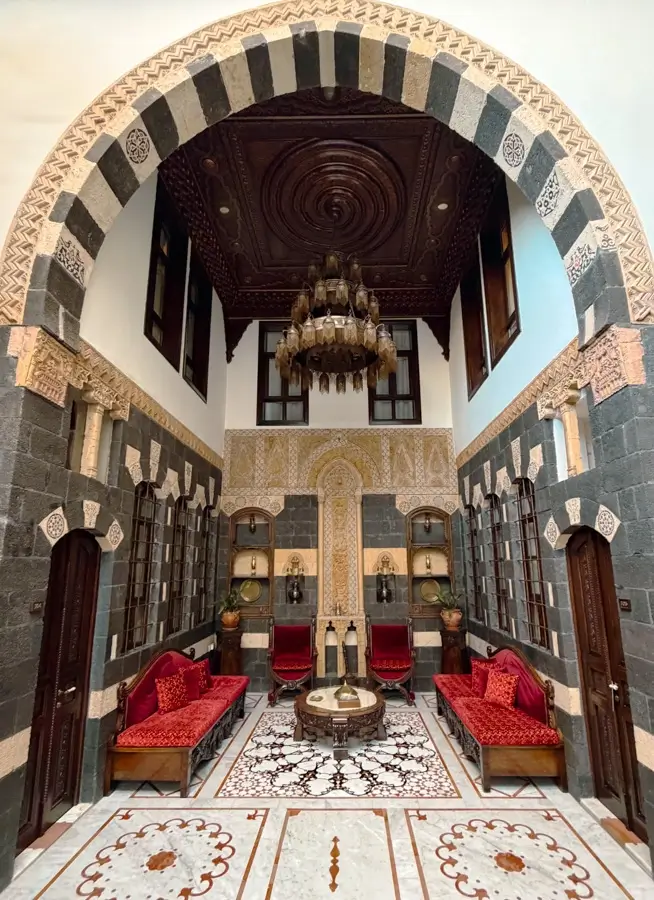
Iwan (إيوان)
A domed room with a monumental arch opening onto a courtyard. One of the defining features of traditional Damascene homes.
A guide to the key architectural elements found across the traditional courtyard homes of Babtouma, Syria. From the Arabic terms to what they look like and why they matter. Courtyard houses like these were built around a shared architectural concept. Walk through any of these houses and the same handful of features reappear: a central courtyard open to the sky, an iwan offering shade, walls striped in ablaq stone.
 Structural Elements
A domed room with a monumental arch opening onto a courtyard. One of the defining features of traditional Damascene homes.
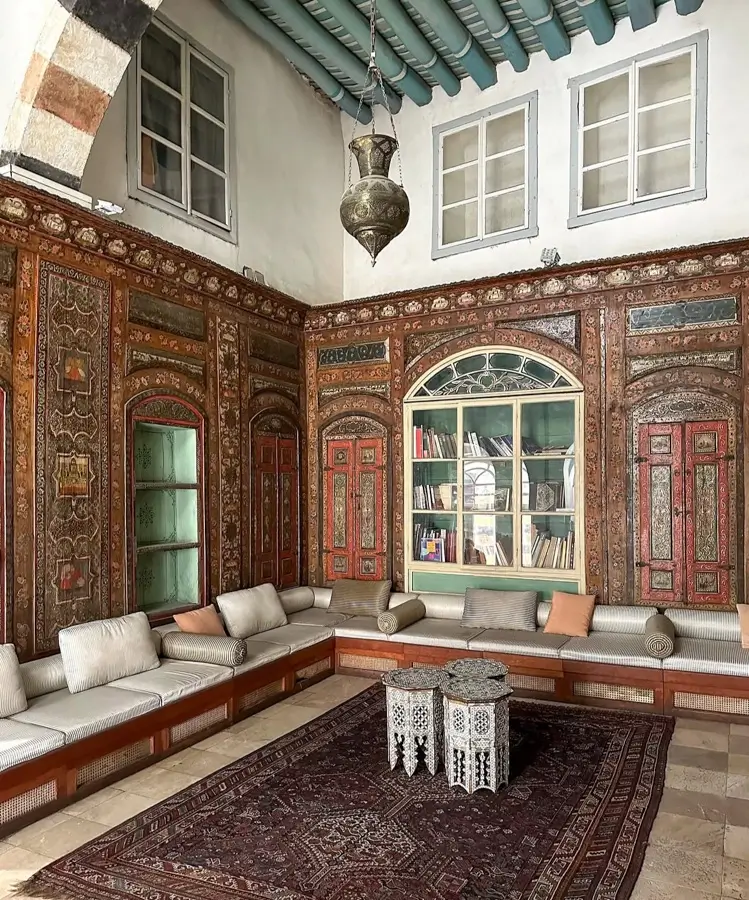
The private wing of the home, off limits to guests. This area contains the sleeping areas, the kitchens, the hammam, and the servant quarters.
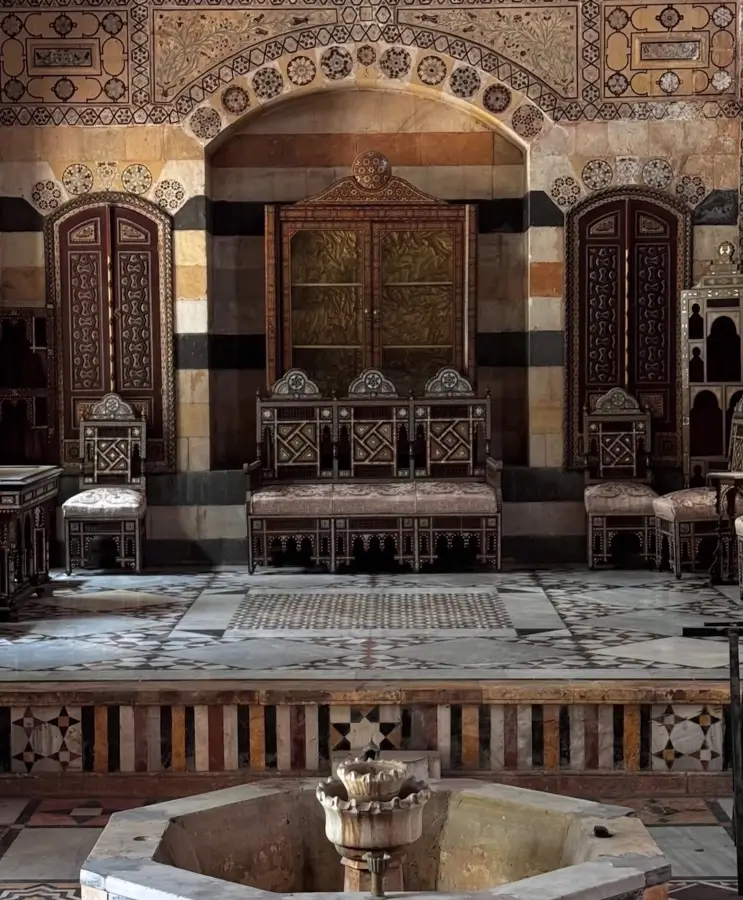
The main reception area is usually the most beautifully decorated space in the home and is used for formal get-togethers.
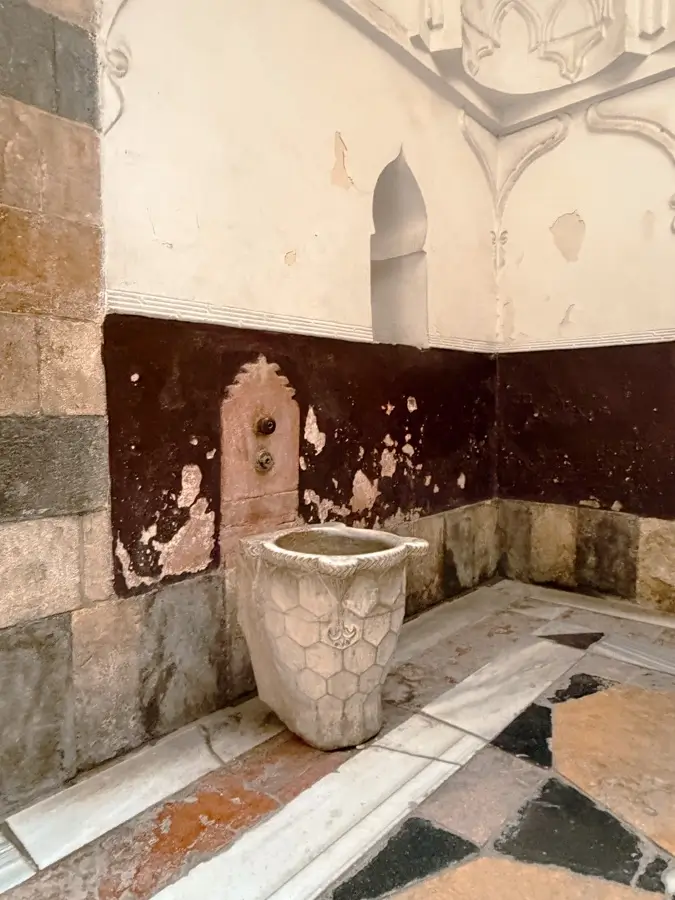
Private baths within the home have a similar structure to a modern bathhouse and are found within the haramlik.
Courtyard & Water Features 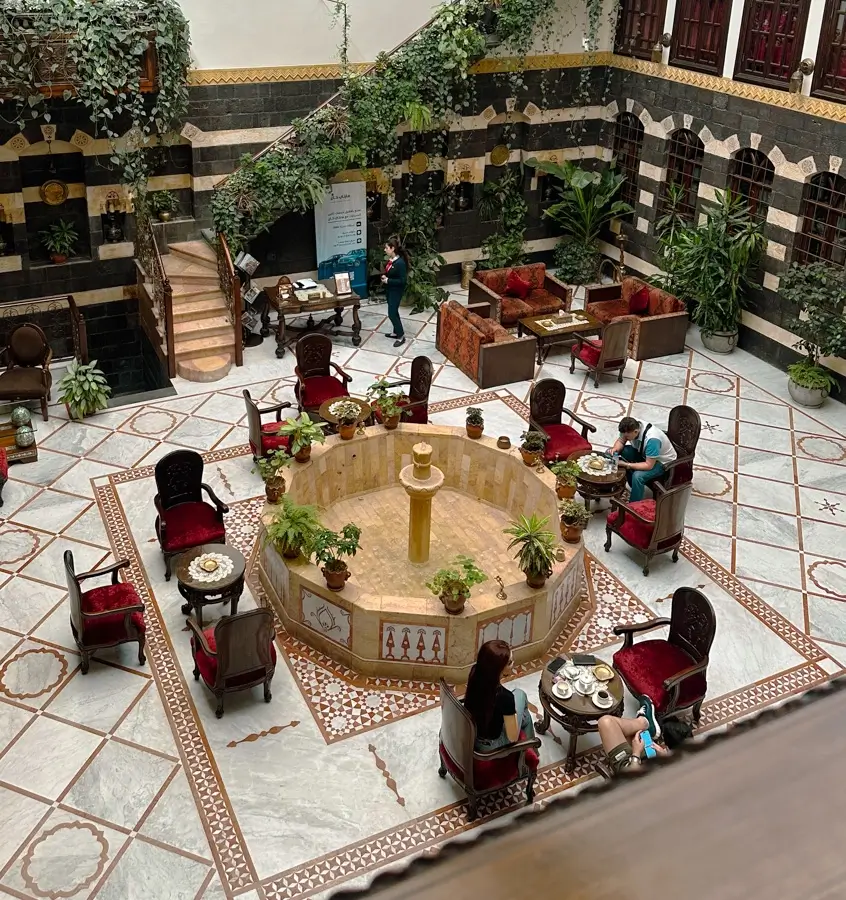
The courtyard itself, the entire open-air space at the center of the house. The main source of light, air, and daily life within the home.
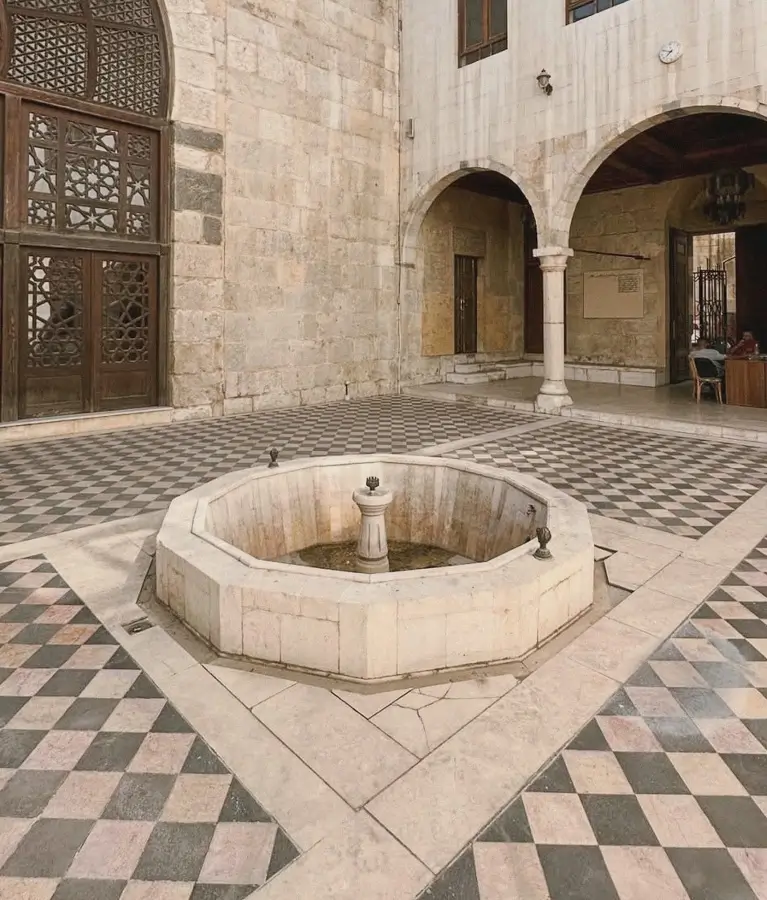
The fountain that sits inside the sahn. Usually found at the center of the courtyard floor and is often octagonal.
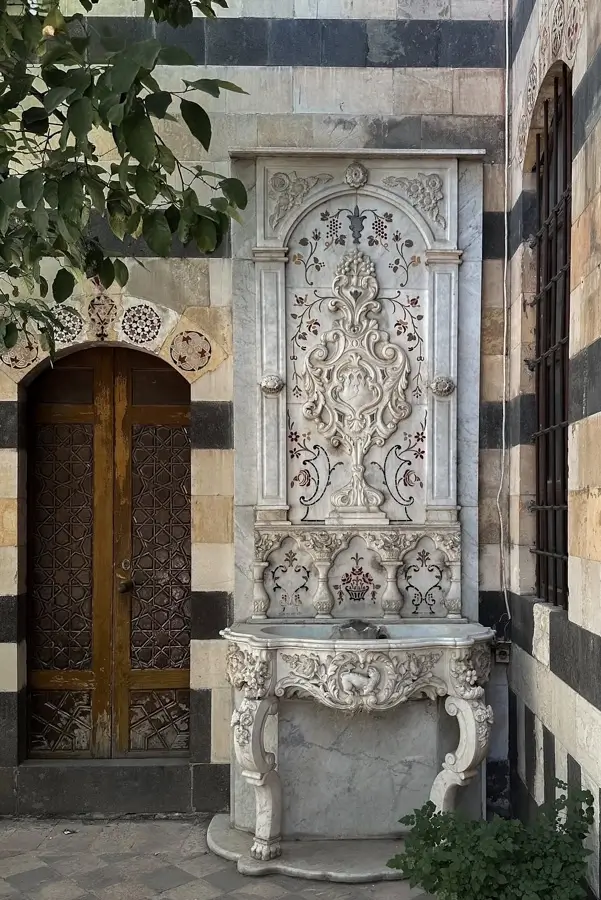
A wall-mounted fountain, usually built on the side of the courtyard, faces the iwan and is made of marble.
Architectural Details 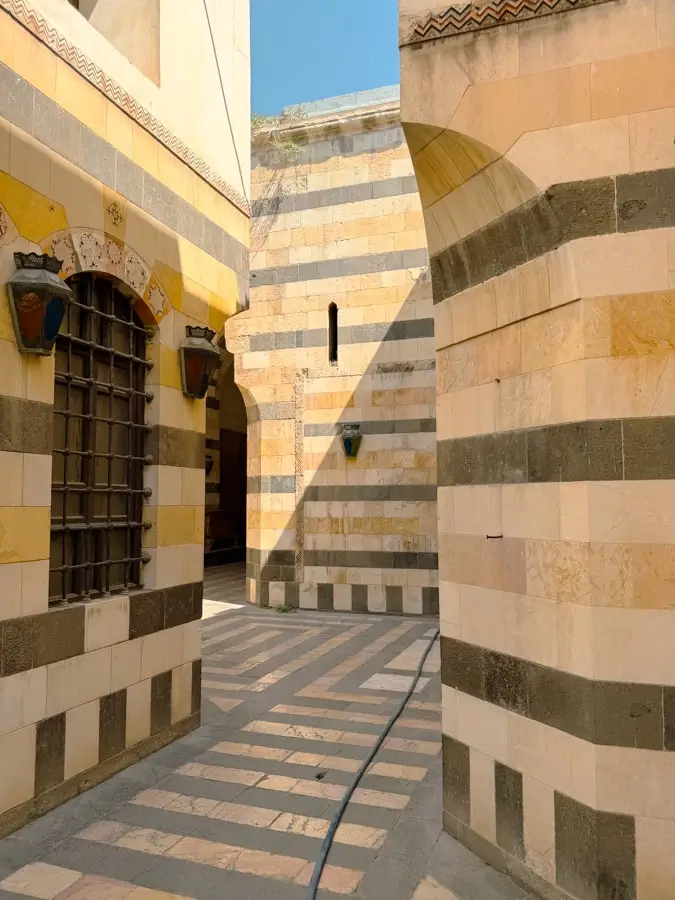
An architectural technique of alternating black basalt and white limestone. Found in Al-Azem Palace from the 18th century.
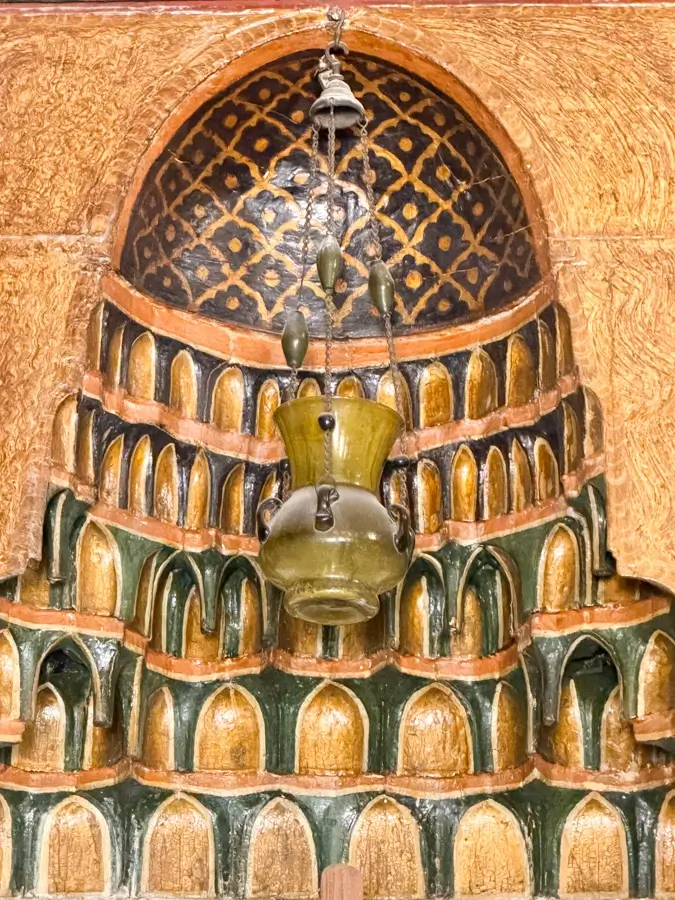
The stunning "honeycomb" or "stalactite" designs are found in traditional Islamic architecture. They are geometric, 3D patterns tucked into arches and ceilings.
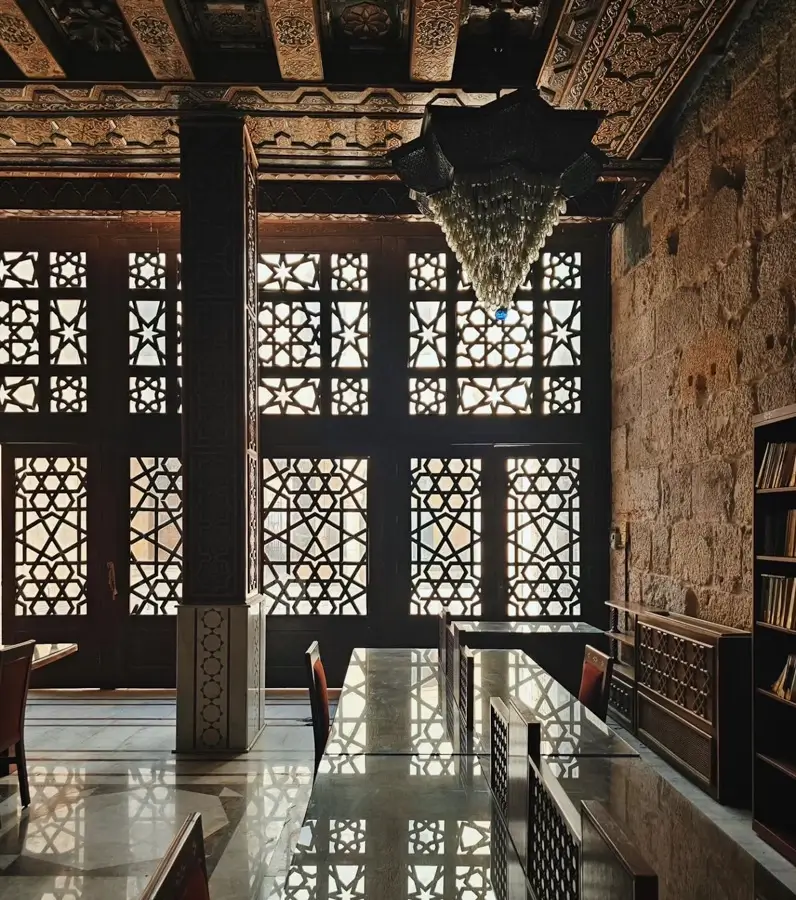
Ornate carved wooden work used in windows and screens, allowing light and air through while preserving the privacy of those inside.
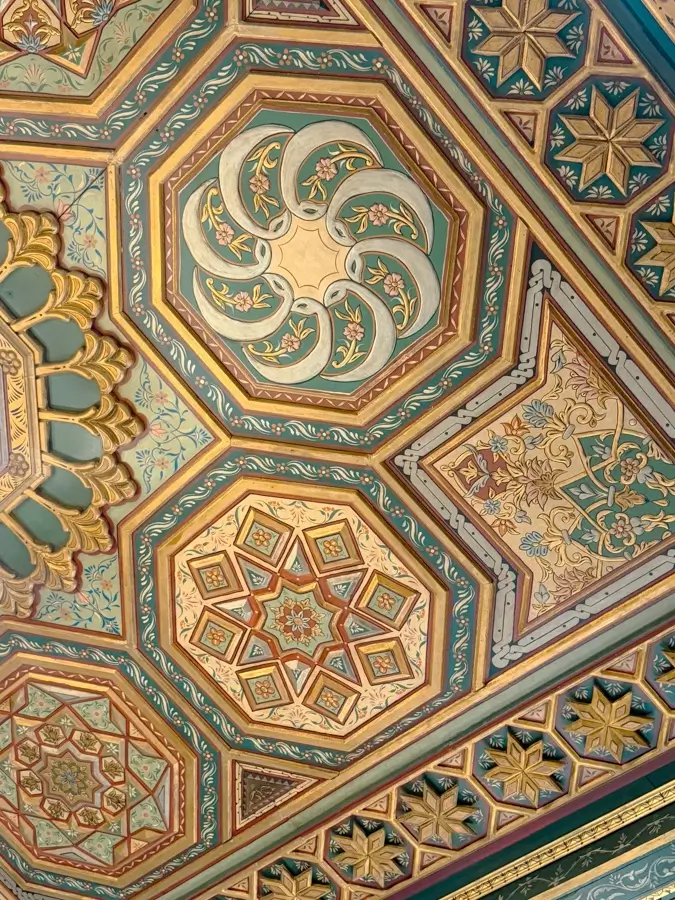
A traditional Syrian interior design technique of raised plaster-paste relief, multi-layered vibrant colors, and metallic gilding on wooden panels.
Materials & Finishes 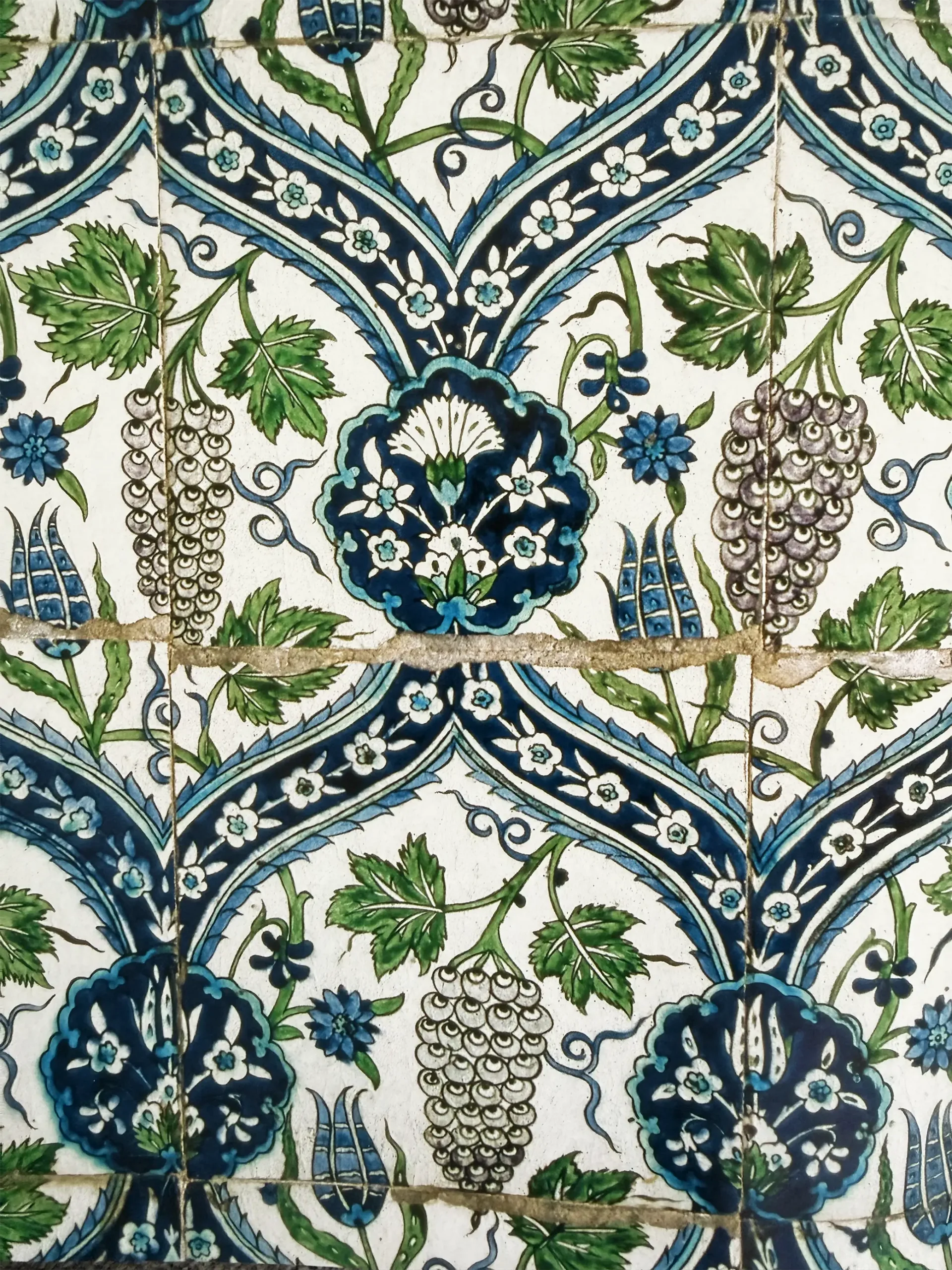
Geometric glazed tilework is used on floors, walls, and fountain surrounds. Typically done in deep blues, greens, and white, and arranged in repeating patterns.
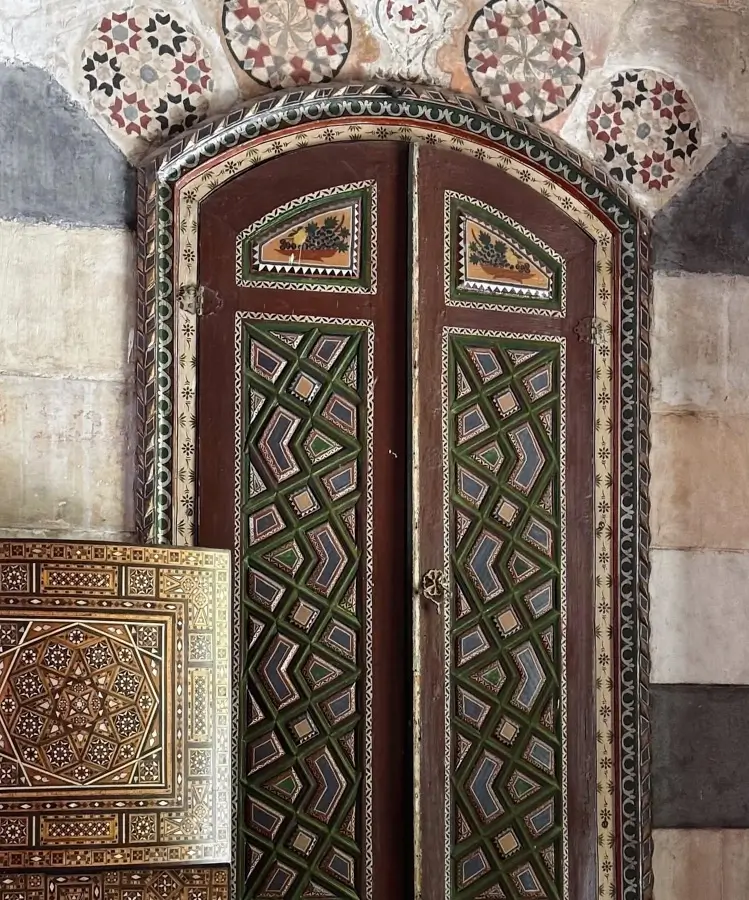
The art and craft of inlaid woodwork to form decorative patterns, pictures, or designs. It's usually found on doors, shutters, and furniture throughout the home.
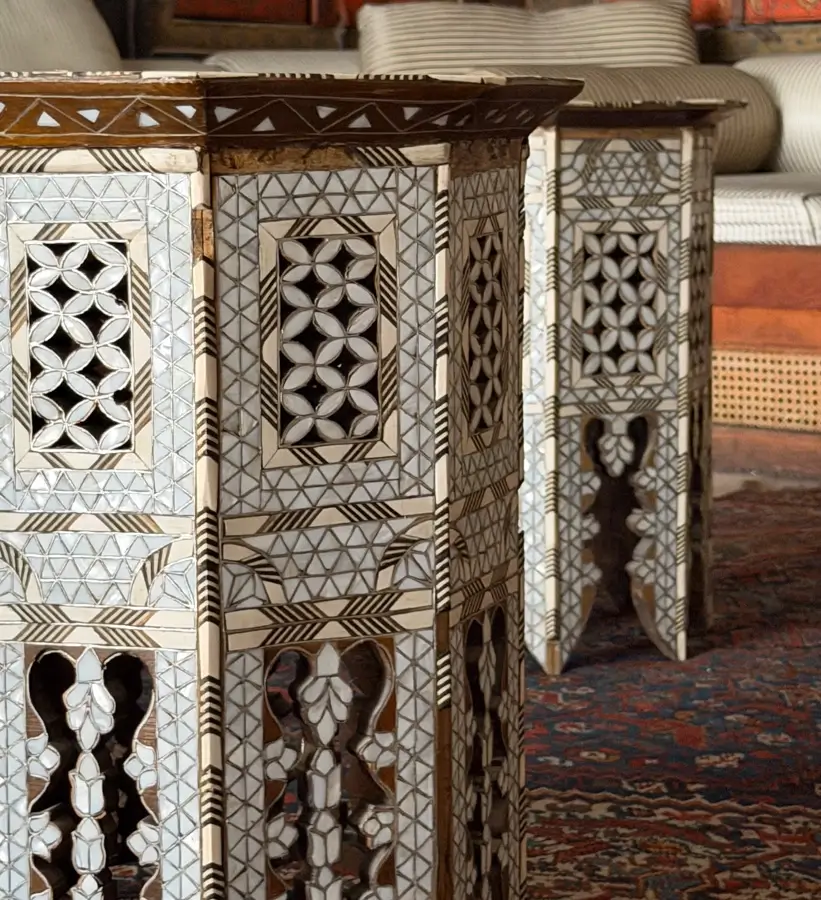
Mother-of-pearl fragments inlaid into wood to form decorative patterns, pictures, or designs. This is a hallmark of traditional Syrian furniture, especially cabinets and decorative boxes.
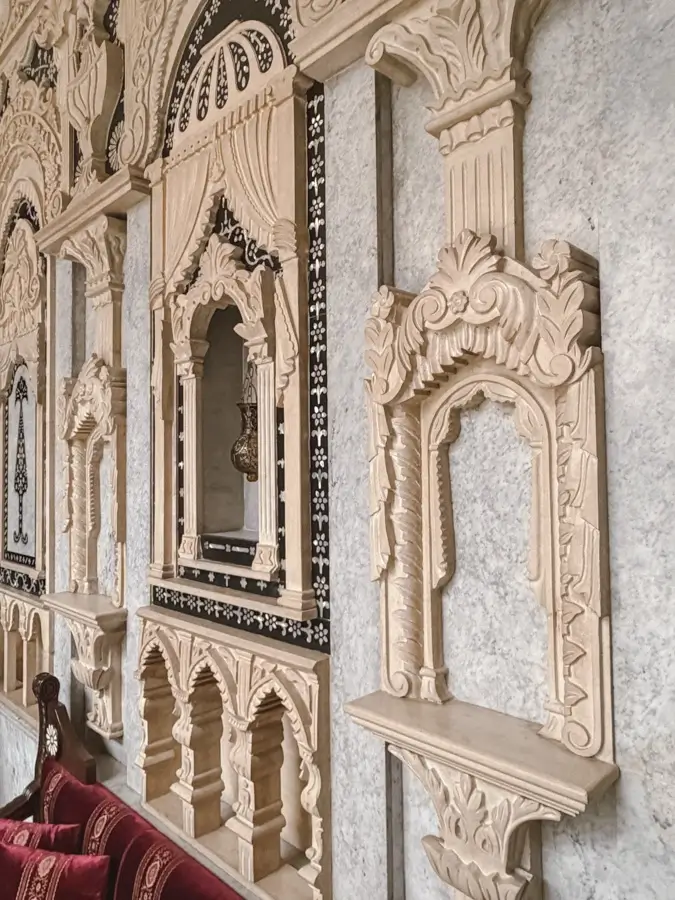
Decorative marble work found throughout traditional Damascene homes, often carved or inlaid to form elaborate architectural details around walls, niches, doorways and reception spaces.